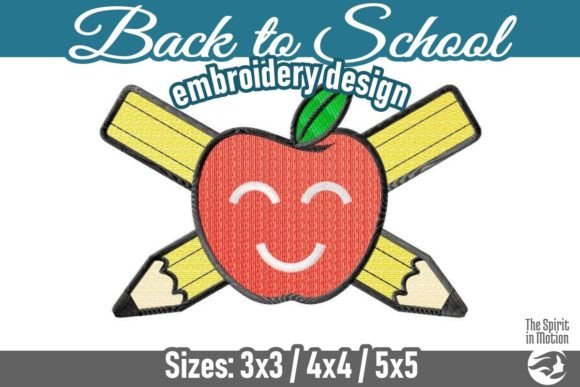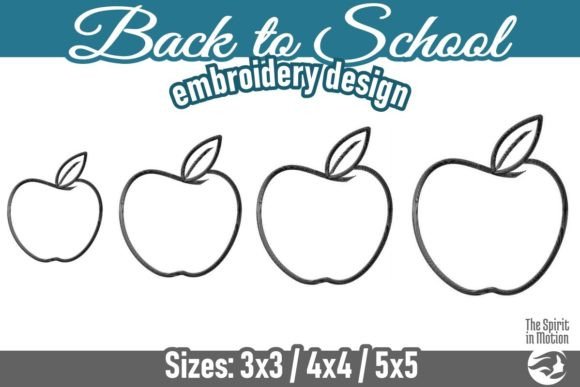
Back to School Outline Apple
A Whimsical Shape That Stitches Clean—But Only If You Respect Its Personality
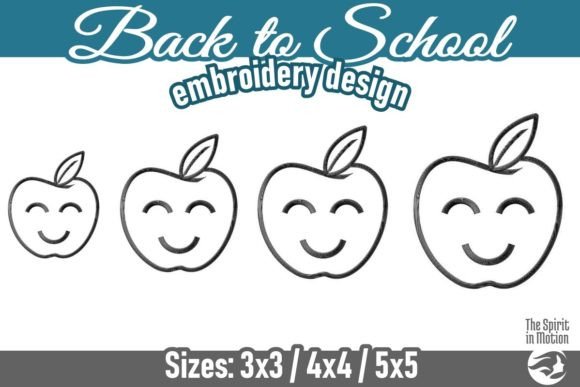
First impression? This isn’t a photorealistic apple or a botanical study—it’s a cheerful, confident outline with rounded curves, a friendly leaf tilt, and just enough asymmetry to feel hand-drawn. The line weight is consistent but not rigid; it breathes like ink on paper, not a vector trace. That matters. As a designer who’s stitched hundreds of school-themed pieces—from kindergarten teacher gifts to boutique nursery aprons—I immediately saw where Back to School Outline Apple fits: not as filler, but as a signature accent. It’s the kind of embroidery file that works best when it’s *meant* to be seen—not buried in dense fill stitch, but leading with clarity.
Real-Life Test: A Teacher’s Personalized Tote Bag
Last week, I prepped a custom embroidered tote for a first-grade teacher—cotton canvas, medium-weight, no stretch. I used Back to School Outline Apple at 3.2” wide on the front pocket, paired with her name in a clean sans-serif running stitch below. No fill. No applique design layering. Just the outline, stitched in navy thread on natural canvas. The result? Instant recognition, zero visual clutter, and a handmade product that looked intentional—not rushed. Customers notice that difference. When the tote arrived, she texted: “It looks like something from my favorite indie shop.” That’s the quiet power of an outline done right: it signals craft without shouting.
Where It Shines (and Where It Needs Guardrails)
Back to School Outline Apple excels on stable, flat surfaces where stitch definition stays crisp:
- Tote bags and tea towels: The open shape reads clearly even at 2.5–4”, and the lack of dense fill stitch means less stabilizer bulk and faster hooping.
- Sweatshirts and baby embroidery: On fleece or brushed cotton, the clean lines avoid pilling traps—no tiny satin stitch corners to snag during washing.
- Embroidered patches and cap fronts: As long as your hoop size comfortably clears the full apple + ⅛” margin, it stitches cleanly on curved surfaces—just confirm the leaf stem doesn’t run too close to the edge.
- Printable mockups and digital product previews: Because it’s outline-only, it converts beautifully to black-and-white line art for Etsy listings or social thumbnails—no lost detail in grayscale.
But here’s what I watched closely—and what you should too:
- Thin or stretchy fabric? Skip lightweight knits unless you’re using cutaway + tear-away combo stabilizer. The outline relies on tension control; wobble shows fast.
- Dark fabric backgrounds? Test contrast early. Navy thread on black denim fades visually. Switch to bright white or lemon yellow for pop—or keep it monochrome with tonal gray thread for subtlety.
- Small hoop sizes (under 4”)? Don’t shrink it below 2”. At 1.75”, the stem and leaf lose their playful weight and start looking spindly—not charming.
- Layered garments (like hoodies with pockets)? Hoop the pocket separately if possible. The outline’s simplicity helps, but fabric shift under the needle still blurs fine edges.
What It Does for Your Craft Business—Beyond the Stitch
As an Etsy seller and small shop product developer, I judge designs not just by how they stitch—but by how they land with buyers. Back to School Outline Apple builds trust because it feels human-made, not algorithm-generated. It doesn’t try to be everything: no hidden text, no over-engineered details, no forced seasonal crossover (no “apple + snowflake” mashups). That restraint makes it versatile across audiences—teachers love it, parents buy it for back-to-school lunchboxes, and boutique owners use it to unify a collection of nursery decor or kitchen towels.
It also supports brand consistency. Unlike busy fill-stitch motifs, this outline adapts seamlessly to different thread colors without losing identity. Try it in sage green for a Montessori shop, cherry red for a school spirit line, or soft peach for baby embroidery—it holds its personality. And because it’s light on stitch density, it scales well across price points: affordable for student-led craft fairs, polished enough for high-end personalized gifts.
Practical Designer Notes—No Guesswork Allowed
Before cutting fabric or listing on Etsy, do these five things:
- Test on scrap fabric first—especially if using textured weaves or dark backgrounds. Watch how the thread lays in natural light vs. studio lighting.
- Review stitch density in your embroidery software. Even outlines can over-stitch if auto-digitized poorly. Look for smooth transitions—not stuttering at curves.
- Confirm licensing terms. Is this embroidery file cleared for commercial embroidery and finished product resale? If unclear, assume it’s for personal use only until verified.
- Check small details in black-and-white mockups. Does the leaf stem read as connected? Does the apple’s curve hold weight at 3”? If it flattens or disappears, adjust scale—not contrast.
- Use appropriate stabilizer. For cotton canvas or twill: medium tear-away. For knits or baby onesies: cutaway + topping. Never skip topping on napped fabrics—it lifts the outline above fuzz.
Final Thought: Charm Is Earned, Not Applied
Back to School Outline Apple doesn’t rely on novelty or trend-chasing. Its strength is in what it leaves out—no shading, no gradients, no unnecessary flourishes. That makes it durable across seasons and customer types. It’s the kind of machine embroidery design that earns repeat use: on a teacher’s apron this August, a baby’s milestone blanket next spring, and a holiday gift bag in December—all while feeling fresh each time. For craft business owners and creative entrepreneurs, that’s rare. And valuable. Use it thoughtfully, test it honestly, and let its clean, playful confidence speak for itself.