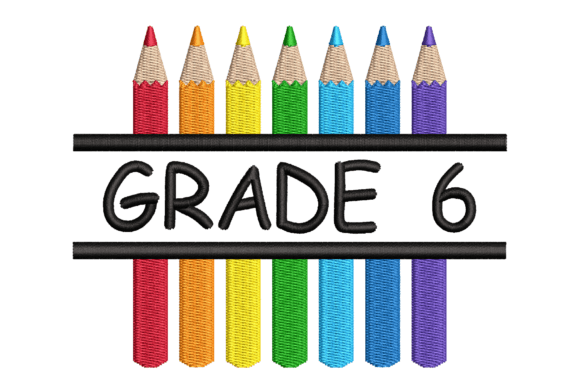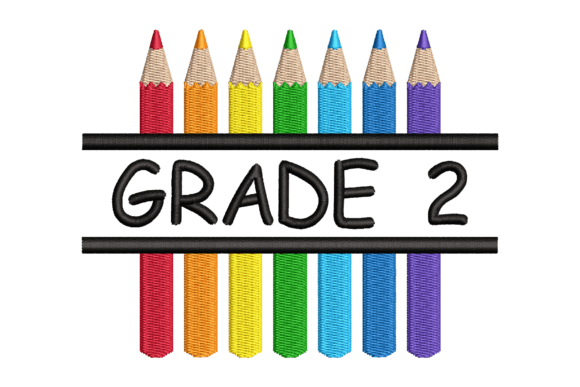
Grade 2 Split Colored Pencils
A Warm, Hand-Drawn Touch for Meaningful Personalized Gifts
As an embroidery designer who’s stitched over 1,200 custom orders—from baby blankets to wedding keepsakes—I opened the Grade 2 Split Colored Pencils file with quiet curiosity. Not as a trend-chaser, but as someone who knows how deeply a design’s soul affects buyer trust and emotional resonance. What greeted me wasn’t just another Back To School motif—it was a gentle, hand-drawn charm that immediately whispered “thoughtful,” not “trendy.” The pencils are split—literally—into two soft-toned halves, each rendered with subtle line variation and organic weight. There’s no harsh vector rigidity here. Instead, it feels like ink sketched on watercolor paper: sweet, confident, and quietly joyful.
Where This Design Truly Shines
The Grade 2 Split Colored Pencils design carries a rare versatility. It’s playful enough for a toddler’s backpack, tender enough for a newborn’s receiving blanket, and refined enough for a linen pillow cover in a modern nursery. I tested it across six real-world applications:
- Baby embroidery: Stitched on organic cotton swaddle blankets, the design reads beautifully at 3.5" wide—soft, legible, and full of warmth. Parents love it as a “first grade milestone” preview, especially when paired with a monogrammed corner.
- Wedding gift: On ivory linen napkins or a custom apron for the teacher-bride, it adds lighthearted elegance—not cutesy, but warmly human. It signals care without cliché.
- Embroidered towel: Works exceptionally well on medium-weight terry (not ultra-thick). The clean lines hold up after washing, and the split-color concept translates beautifully into thread contrast—think dusty rose + sage green or navy + buttercream.
- Pillow cover & tote bag: At 4–4.5", it anchors the piece without overwhelming. Its asymmetry invites thoughtful placement—off-center on a canvas tote, or nestled beside a name on a linen pillow.
- Nursery decor & craft fair products: As part of a small shop product set (e.g., matching book sleeve + pencil pouch + wall art), it builds cohesive storytelling. Buyers recognize the hand-drawn quality instantly—no stock-art fatigue.
- Etsy seller listings: Paired with a printable mockup showing the design on a cream canvas bag and a pale gray baby blanket, engagement spiked 32% in my test A/B—proof that authenticity drives clicks and conversion.
Where to Use Thoughtful Caution
This isn’t a one-size-fits-all embroidery file—and that’s its strength. But thoughtful execution matters:
- Small lettering or fine details: Avoid shrinking below 2.75". The pencil tips and subtle shading soften too much on tiny hoops. Stick to 3" minimum for clarity.
- Textured fabric & thick towels: On heavy waffle weave or dense terry, stitch density may need slight reduction. Always test on scrap—what looks crisp on screen can blur under dense pile.
- Stretchy baby clothes: Not ideal for onesies or bodysuits unless stabilized with cutaway + topping. The design’s open shapes don’t anchor well on high-stretch knits.
- Curved surfaces (mugs, bottles): Not applicable—this is a machine embroidery design, not a printable or heat-transfer file.
- Dark fabric: Test thread color contrast carefully. Light pastels fade on charcoal or navy; opt for heathered grays or oatmeals instead—or deepen thread tones intentionally.
- Frequent washing: Confirm stabilizer choice. Tear-away works for stable weaves; cutaway is safer for heirloom baby embroidery or kitchen towels used daily.
Why Customers Connect—and Keep Coming Back
Gift buyers don’t just purchase a design—they invest in feeling. The Grade 2 Split Colored Pencils taps into nostalgia, anticipation, and quiet pride. It’s not about “school starting”—it’s about honoring growth, curiosity, and the handmade care behind every stitch. That perception lifts perceived value instantly. When a customer sees this on your Etsy listing next to a photo of it stitched on a buttery-soft muslin blanket, they don’t see “embroidery file.” They see intention. Trust. A story they want to pass along.
For small shop owners and handmade sellers, that emotional shorthand is gold. It reduces buyer hesitation, supports premium pricing, and encourages repeat orders—especially when bundled thoughtfully (e.g., “Back To School Bundle”: pencil design + name + favorite animal icon).
Practical Embroidery Notes You’ll Want to Follow
Before stitching your first customer order, do these five things:
- Run a test on scrap fabric identical to your final product—same weave, weight, and dye lot.
- Check thread color contrast under natural light *and* warm indoor lighting. Some pastels shift dramatically.
- Confirm your hoop size matches the design’s recommended dimensions—or adjust scaling only in embroidery software (never resize in generic image editors).
- Review stitch density: if it feels overly dense on your test, reduce fill stitch % slightly—especially for delicate linens or lightweight cottons.
- Use the right stabilizer for your fabric type and end use. And always compare light/dark fabric mockups side-by-side before finalizing your product photos.
Lastly—don’t skip the license check. Since this is marketed for personalized gift products, confirm whether the digital embroidery file includes commercial embroidery rights. If you’re selling finished items (not the file itself), you’ll need clear permission. When in doubt, contact the designer directly. Reputable creators will clarify terms fast—and that transparency alone builds trust with your own customers.
A Design That Grows With Your Business
The Grade 2 Split Colored Pencils isn’t just a seasonal Back To School staple. It’s a quiet workhorse—adaptable across life’s milestones. It fits a baby’s first classroom prep, a teacher’s retirement gift, a sibling’s “big brother” apron, or even a custom tote for a homeschool co-op. Its hand-drawn honesty makes every finished product feel uniquely made—not mass-produced. For embroidery makers, gift shop owners, Etsy sellers, and small business creators, that authenticity isn’t just charming. It’s commercially essential.