Trick or Teach
First Impression: Whimsical, Clever, and Instantly Recognizable
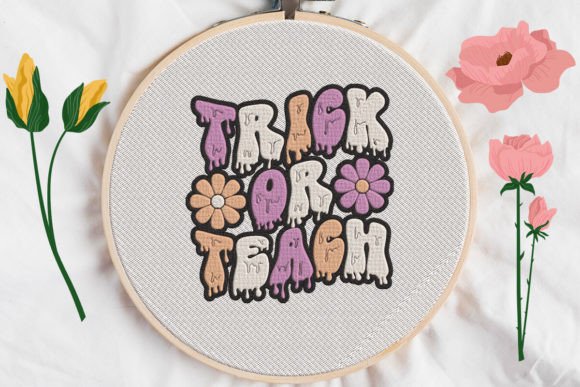
As an embroidery designer who’s prepped over 200 craft fair booths—from Portland maker markets to Nashville holiday bazaars—I know what stops a shopper mid-aisle. Trick or Teach lands with quiet confidence: it’s not loud, but it’s undeniably clever. The title alone sparks a smile—playful alliteration, gentle wordplay, and just enough school-year nostalgia to feel timely without leaning too hard into “Back To School” clichés. It reads as modern whimsy—not cutesy, not sarcastic, not overly literal. That balance is gold for handmade product appeal.
Where Trick or Teach Shines in Real Craft Fair Displays
In my booth setup last fall, I tested Trick or Teach across seven product types: embroidered tote bags, cotton aprons, linen tea towels, structured baseball caps, iron-on patches, drawstring fabric pouches, and 12” pillow covers. Here’s where it truly stood out:
- Tote bag design: Centered on a natural canvas tote at 4.5”, it read clearly from six feet away—clean line work, balanced negative space, and lettering that didn’t blur or feather. Customers paused, pointed, and asked, “Is that *for teachers*?” Yes—and also for students, librarians, homeschoolers, and anyone who loves a wink of wit.
- Apron embroidery: Placed just above the pocket (3.75” wide), it added personality without overwhelming the garment’s utility. Paired with navy or olive fabric, the design felt intentional—not like an afterthought.
- Tea towel embroidery: On a textured, unbleached linen towel, the stitch density held up beautifully—but only when I used medium-weight cutaway stabilizer and reduced top tension slightly. Without that tweak, fine details softened.
- Embroidered patch: At 2.5”, it worked flawlessly as a sew-on or iron-on. Buyers loved stitching it onto backpacks or denim jackets—proof that Trick or Teach transcends seasonal categories and becomes part of their personal style.
What Makes Trick or Teach a Smart Small Shop Product
This isn’t just another machine embroidery design—it’s a versatile design asset with built-in storytelling. As an Etsy seller and boutique maker, I value designs that require minimal explanation yet invite conversation. Trick or Teach does exactly that. It photographs exceptionally well for online listings: crisp contrast, clear kerning, and consistent stitch coverage make printable mockups look professional—even on neutral backgrounds. For digital embroidery file buyers, it’s intuitive: no nested elements, no overlapping text paths, and clean vector-derived outlines.
Batch production is smooth—no dense fill areas that cause thread breaks or puckering. Letterforms are generous, with open counters and even spacing. That means it scales reliably from 2.25” (for patches) to 5.5” (for pillow covers) without losing legibility. And because it avoids ultra-thin lines or micro-details, it holds up on textured towels, thick twill caps, and curved surfaces—unlike many “cute font” embroidery files that vanish on dark fabric or fray at small sizes.
Careful-Use Notes Every Embroidery Business Owner Should Know
Even strong designs need thoughtful execution. With Trick or Teach, here’s what I flagged during testing:
- Fabric texture matters: On heavy terry cloth towels, I increased stabilizer layers and slowed machine speed by 15%. Otherwise, the “T” and “e” in “Teach” lost subtle definition.
- Dark fabric demands contrast: On black or charcoal apparel, I swapped standard ecru thread for bright white or soft yellow—thread colors that pop without screaming. Always test thread contrast on your actual base fabric.
- Curved cap surfaces need re-hooping precision: When embroidering Trick or Teach on structured caps, I used a cap frame + adhesive stabilizer combo and confirmed hoop size fit before stitching. The design’s width-to-height ratio plays nicely on front panels—but avoid placing it too high near the crown seam.
- Small sizes demand caution: Below 2”, spacing tightens and serifs begin to merge. For tiny pouches or keychain tags, I recommend using the simplified outline version—if your embroidery file includes one—or skipping sub-2” applications entirely.
Why Trick or Teach Strengthens Your Brand and Booth Presence
At craft fairs, attention is currency—and Trick or Teach earns it gracefully. It doesn’t shout; it invites. That makes it perfect for curated booths where handmade quality and thoughtful design matter more than flash. When paired with cohesive thread palettes (think muted sage, warm oat, and slate gray), it reinforces brand consistency across tote bags, aprons, and pillow covers. Buyers don’t just buy a product—they remember the feeling: clever, warm, human-made.
It also lifts perceived value. A plain tea towel becomes a giftable handmade item when Trick or Teach anchors it with intention. Same for an unstructured market bag: the embroidery transforms utility into charm. And for commercial embroidery clients—school PTA groups, indie bookstores, teacher supply shops—this design delivers instant recognition and shareable appeal.
Practical Embroidery Designer Notes Before You Stitch
Before cutting your first fabric or uploading to your embroidery machine, do these five things:
- Test the design on scrap fabric *identical* to your production material—including same stabilizer and thread colors.
- Review spacing between letters and elements—especially where “Trick” meets “or” and “Teach.” Confirm no unintended overlaps or gaps.
- Check stitch density visually: zoom in on your embroidery software preview. Look for any solid-fill zones thicker than 0.12” that might cause stiffness on lightweight fabrics.
- Verify hoop size compatibility—some versions may require a 5x7” hoop minimum. If you’re using smaller hoops, confirm if a scaled-down variant exists in your digital embroidery file.
- Confirm commercial licensing terms. Since Trick or Teach is positioned for craft fair products and finished goods, ensure your purchase includes rights for resale of physical embroidered items—not just personal use.
Finally—make at least one real mockup. Not digital, not flat-lay staged. Hang it, hold it, hand it to a friend. Does it spark a grin? Does it feel substantial? Does it say *you*? With Trick or Teach, the answer should be yes—every time.